Monday, 16 March 2015

Lau Chingdi/Prawns and Bottle gourd

Lau Chingdi/Prawns and Bottle gourd


I don’t know why some people don’t like Lau or Lauki. It is a very adaptable vegetable. You can cook it with so many other things, each giving it a distinct flavour. 

I love it cooked simply with salt and turmeric with a sprinkling of coriander leaves.

I can have it with coconut. 

It tastes amazing with poppy seeds paste. I can go on and on.

In this dish the prawns and lauki make a super duper broth. It is spicy with a hint of sweet. It has the fragrance of prawns and the crunch of the lauki. It is best eaten with hot steaming rice. I can almost smell the aroma as I write about the dish 

Ingredients

1 medium Lauki/bottle gourd, skinned and chopped
250 gms prawns
½ tsp nigella seeds
3 green chillies, slit
1 tomato, sliced
1 tsp salt
1 tsp turmeric powder
¼ tsp sugar
1 tsp coriander powder
¼ cup mustard oil ( If you don’t have mustard oil you can use any vegetable oil)
Coriander leaves to garnish

Wash and clean the prawns. Apply some salt and turmeric to it and keep aside for ½ hour. 

Heat the mustard oil. Saute the prawns for 3-4 minutes. The prawns will turn reddish. Take the prawns out. 

In the same oil add the nigella seeds green chillies. Add the sliced tomato for some time. Now add the chopped Lauki. Saute for some time and then add the salt, turmeric powder, sugar and coriander powder. Cover and cook till the lauki is almost cooked.

 Now add the prawns, cover and cook for 5 more minutes. You don’t need to add any water as the vegetable will release a lot on its own. Garnish with coriander leaves. 


Sunday, 15 March 2015

Aloo Posto Bora

Aloo Posto Bora


The typical Bengali meal starts with a bhaja or a bora. This is usually accompanied by dal. Dal, bhaat, bora..you get the idea.

I am a big fan of posto/khus khus/poppy seeds. I can have it as posto bhaja, where first you make a paste and then fry it in a little mustard oil. I enjoy it with vegetables as in aloo posto, jhinga posto, lau posto, etc. I love it with chicken and fish. 

Of all the courses mentioned I missed out on the bhaja bit. There are two ways you can make posto bora. One includes making a paste of it, which I will make at a later time. 

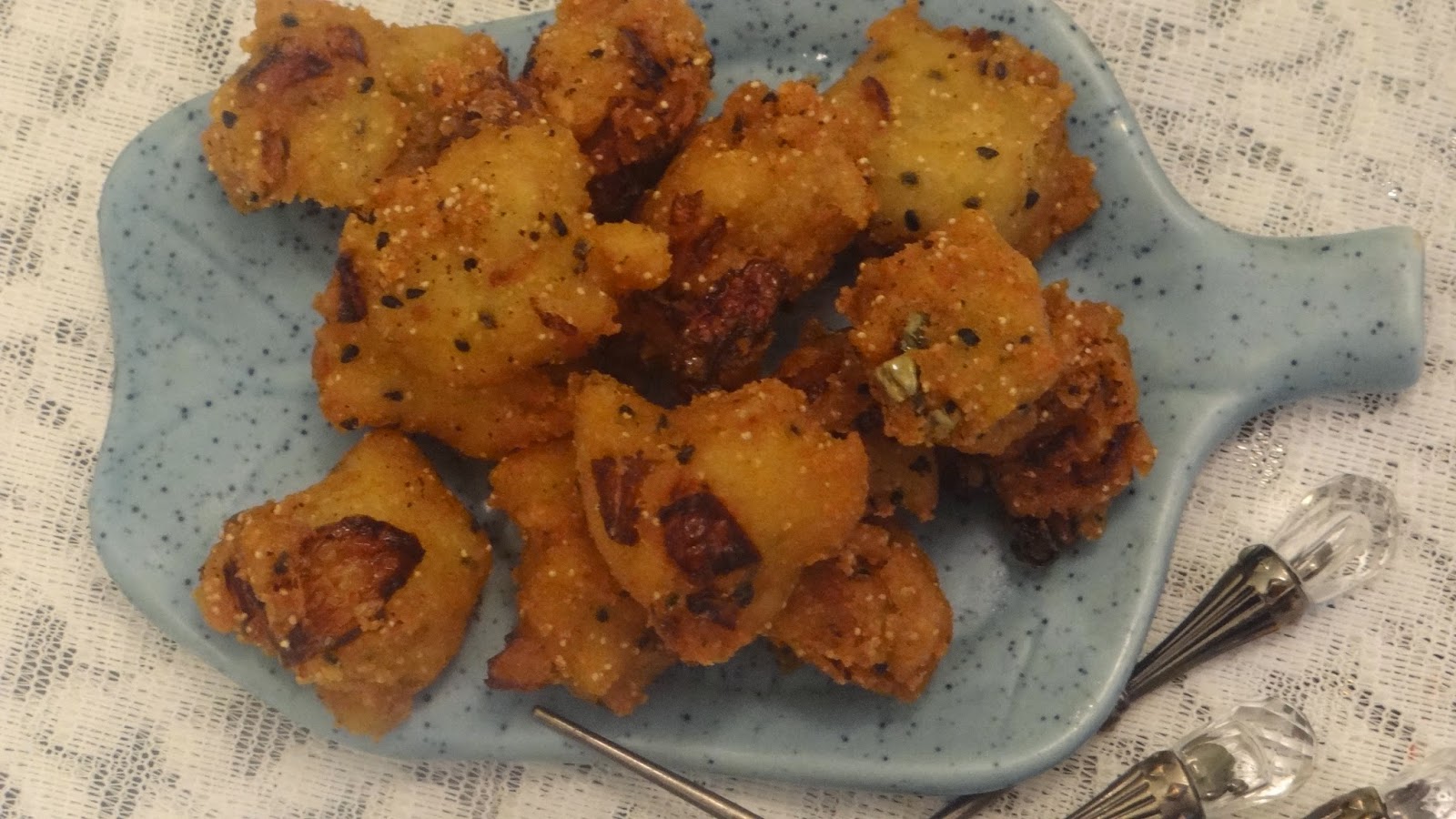
The most convenient one is this Aloo Posto Bora. You can have it with hot, steaming rice or you can have it as a snack. Whenever this bora is made only 30 % reaches the dining table. The rest 70% is eaten hot standing in the kitchen.

Ingredients

2 potatoes, boiled
¼ cup posto/khus khus
½ onion, chopped
3 green chillies, chopped
2 tbsp chopped coriander leaves
Pinch of nigella seeds
Salt to taste

Mix all and mash well. Now heat some oil. Once the oil is hot make small roundels and deep fry them. Try not to eat as you fry. Keep some for others.LOL


Sorse Tel Koi/Climbing Perch Fish in Mustard

Sorse Tel Koi/Climbing Perch Fish in Mustard 


Koi !!
Koi kaun?
Koi !!
Koi kya??

This is a conversation I had with a Hindi speaking friend of mine. We were stuck on the word “koi”, which in Hindi means “someone”. In Bengali it refers to a fish named Koi or the Climbing Perch fish which belongs to the carp family. 

Its is usually found in the eastern states of India. Its natural habitat is ponds, ditches and swamps. In the villages of West Bengal the “pukur” or ponds are teeming with this fish. It is supposed to be eaten fresh , ie, when you are cutting and prepping the fish it should be alive. 

In older times it was easily available in the villages which used to have at least 4-5 “pukur” each. With the population shifting to urban areas the availability of the fish has gone down. Even if you can lay your hands on it, it is not going to be alive.

I remember a childhood visit to our ancestral village. This was about 25 years ago when there were no proper roads to the village. I remember going in a bullock cart. Being from the zamindar family we owed all the ponds in the village. There were two ponds in our backyard. One was meant for bathing and washing clothes. And the other one had these Koi fish in hundreds. That pond was not used for anything else other than fishing. 

All that now seems like a lifetime ago. So when I got the chance to eat Koi maach again I was reminded of those simpler times.

There are many ways to cook the fish. Each family has its own recipes. 

Ingredients

4 Koi maach+1/2 tsp turmeric powder+1/2 tsp salt
½ cup mustard seeds
2 green chilies
1 potato, cut into wedges
1 tsp nigella seeds
1 tomato, sliced
1 tsp turmeric powder
1 tsp salt
½  cup mustard oil

Wash the Koi and apply salt and turmeric on them. Keep aside for 15 minutes. Heat the mustard oil and shallow fry them on both sides.
Make a smooth paste of the mustard seeds along with green chillies and a pinch of salt. 
Add the nigella seeds to the hot oil. Add the potato wedges and fry for some time. Add the sliced tomato, cover and cook till the tomato is soft. 
Add the mustard paste, salt and turmeric powder. Fry till oil starts leaving the sides. Add a cup of water and bring to a boil. Add the fish, cover and simmer till done. 
Once the fish is done, switch off the heat and add 1 tbsp of raw mustard oil for that special fragrance. 


Wednesday, 11 March 2015

Shiuli Patar Pakoda

Shiuli Patar Pakoda


Shiuli is known also as Harsingar, parijat and Night Jasmine. It is a sacred tree mentioned in our mythological stories. It is said to be one of the five trees that exist in heaven. And I will never dispute that. 

It starts flowering in the month of September and ceases by November. Its smell is indeed heavenly and that smell has a special connotation for Bengalis. 

It heralds the approach of Durga Puja. It indicates that special time of the year that every Bengali awaits. I consider one of the few lucky ones who has a Shiuli tree in a concrete jungle like Delhi. One of my happy memories is getting up in the morning and giving the tree a vigorous shake and watch the flowers tumble down.

Apart from its intoxicating fragrance the Shiuli tree is also known for its medicinal value. Its leaves are used for treating chronic fever, rheumatism, arthritis, joint pain etc. having it on a daily basis also helps keep these ailments at bay. However the leaves are rough and bitter. So chewing them raw is not a popular option. So the best way to have them is by making pakodas. And they taste amazing with hot steaming rice.

Ingredients

10 Shiuli Leaves
1 cup besan
½ cup rice flour
1 tsp Nigella seeds
1 tsp khus khus
Salt to taste
1 tsp turmeric powder


Wash the leaves well. 


Make a besan of everything except the leaves. Heat some oil. Dip the leaves in the batter so that they are well coated. Deep fry. 


Tuesday, 10 March 2015

Kochur Saag/Colocassia leaves

Kochur Saag


Kochu or Arbi or Colocassia, however you know it, is a very ugly looking thing. Specially the leaves. Have you seen them growing in their natural habitat. They grown in dirty, swampy marshes.


 The leaves accumulate dirt and grime from the surroundings. And then you wonder how can such a plant have medicinal benefits, how can such a plant or its leaves taste so awesome. Difficult to believe, right?

This dish is from my mom’s kitchen. It takes a lot of work and, you guessed it right, I am just too lazy. And what better than to come home and make demands of your mom.

Ingredients

A bunch of Colocassia leaves/Kochur Saag
1 cup chana dal, soaked and ground to a paste
2 green chillies
1 tsp nigella seeds/kalonji
Salt to taste
Pinch of sugar
1 tsp haldi powder

Usually when you buy the leaves they come with a hard knobbly part at the bottom. You have to first cut it off because you will only be cooking the leaves. The leaves will feel rubbery. 


Once you cut the leaves into big pieces you will have to skin them to remove the hard, unpalatable outer layer. 


You will have clean tubular leaves. 


Discard the outer skin altogether.


Now pressure cook the leaves in a cup of water. Take off the heat after two whistles. Once the pressure drops take them out and you will be left with this mushy thing. Drain all excess water.


Heat some oil. Add the green chillies and nigella seeds. Then add the boiled leaves and fry on high heat. 


Keep mashing as you stir so that it becomes a smooth lump. Add the chana dal paste, salt, turmeric and sugar.


 Keep stirring and add the chana dal paste. 


Stir well so that the saag and chana dal paste mix well. 


Now lower the heat to sim, cover and cook till the water dries up and it starts leaving the sides of the pan. Garnish with green chilli and have it with a bowl of steamed rice. 


Drums of Heaven

Drums of Heaven


We have a neighbourhood restaurant that is our favourite haunt. 

Birthdays or anniversaries..eat there! Exams are over..lets go!! Friends coming over and you just came back from work..meet you there!! Feeling too lazy to cook..it will be a good evening walk/stroll going there!! You get the idea.

 It is quiet and homely and it has the deadliest Drums of Heaven. I have been eating this very same dish every time I go there for the past 20 years. 

Drums of heaven is basically chicken lollipop served with schezwan sauce and lots of onions and garlic. When I am away(which I mostly am) and I feel homesick this dish is one of the things I miss. So to remind me of a taste of home and friends and get-togethers..I make this often. 

I have used ready made chicken lollipops because who wants extra  hassle. However if you don’t have the ready made ones you can make them at home. Simply take chicken wings and break off one of the bones. Now using a blunt knife push the meat towards one end. All the meat will be bunched up and form a lollipop. Now marinate these lollipops in a batter of cornflour, soya sauce and salt. Then simply deep fry. Fry on a low heat so that the chicken is cooked through and through. 


Ingredients

6 Chicken lollipops
2 onions, chopped
5 garlic pods, chopped
3 tbsp homemade schezwan sauce
2 tbsp tomato ketchup
Salt to taste
Deep fry the chicken lollipops. 

Heat some oil. Saute the garlic and then add the chopped onions. Toss on high flame but do not cook it as you would like to keep them crunchy. 

Add the sauce and ketchup and sprinkle a little water. Now add the fried lollipops and toss on high flame till they are well coated with the onion and sauce. 

Homemade Schezwan sauce

I have basically used Tarla Dalal's recipe. However I did not have certain ingredients listed there and so I have improvised using things in my pantry.


Make a paste of
10 dry red chillies
5 garlic pods

Other ingredients
3 garlic pods, chopped fine
1 “ ginger, chopped fine
I onion, chopped fine
2 red chillies, chopped fine
1 tbsp Kashmiri red chilli powder
½ tsp pepper powder
1 tsp vinegar
Salt to taste
1 tsp sugar
½ tsp ajinomoto 
1 tbsp cornflour+1/4 cup water

Boil the red chillies and garlic together for 10 minutes. Cool and blend into a thick paste.
Heat some oil. Saute the ginger, garlic and green chillies till soft and mushy. Now add the red chili paste, Kashmiri red chilli powder, pepper powder, vinegar, salt, sugar and ajinomoto. Cover and cook on low heat for 5 minutes. Add cornflour and water paste to thicken the sauce. Cook till sauce reaches the desired consistency. 


Banana Walnut Choco Chip Cake

Though I bake everyday, it has been ages since I posted anything new on my blog. Last year saw lots of changes ...